Holy Bible Launcher: KJV+Audio
- 4.7
- Rating
- 1.00M
- Installs
- Free
- Price

 Analysis by App-foxy
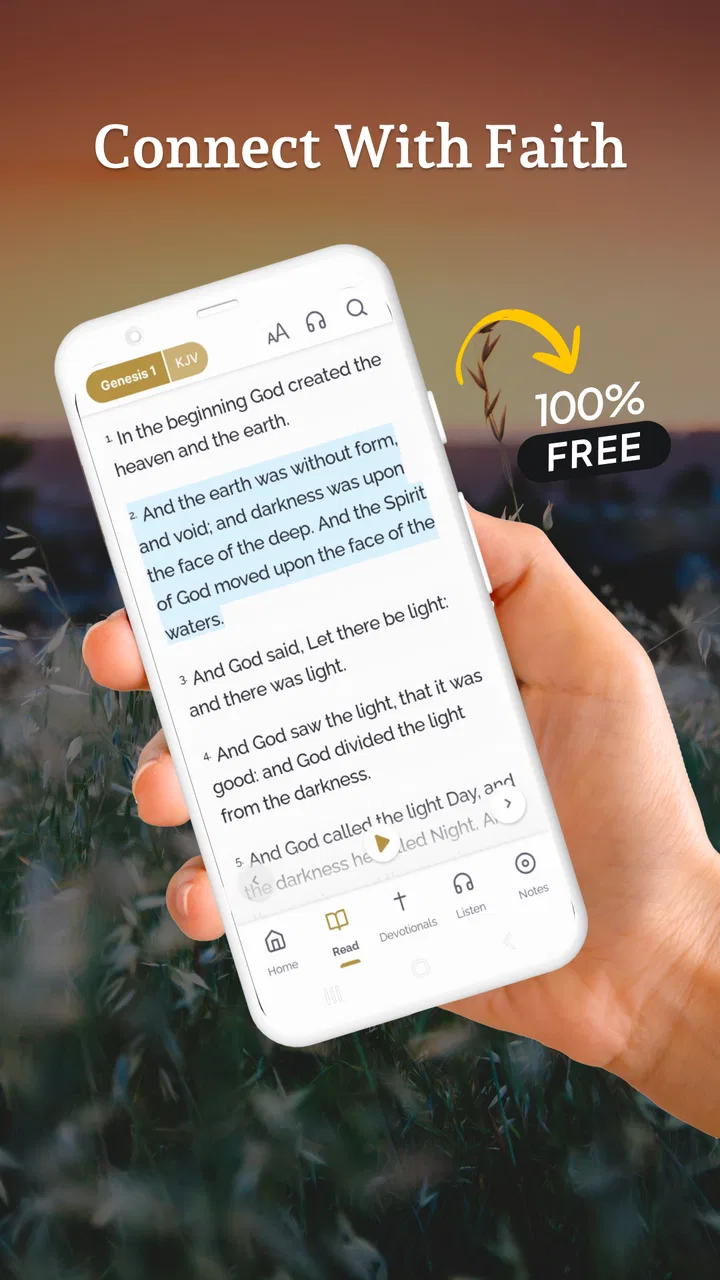
I found Holy Bible Launcher: KJV+Audio most interesting as a small, focused reading tool rather than as an attempt to replace every Bible study resource on a phone. It puts the King James Version at the center, adds audio, and is designed around returning to Scripture regularly. In my experience, that narrow purpose is its main strength: when I want a quick passage, a daily reading habit, or a listening session while doing something else, I do not have to work through a crowded library of unrelated material first.
At the same time, the launcher-style approach changes what I expect from it. This is not the kind of app I would choose primarily for comparing many translations, building a large research library, or joining a social study group. It is a free Books & Reference app from AtomApplications, rated for Everyone, and its appeal comes from keeping the KJV experience direct and approachable. The current version is 3.13.1, and it requires Android 10 or later, so device compatibility is the first practical detail to check.
How the KJV reading experience fits everyday use
The King James Version has a distinctive rhythm and vocabulary, and this app commits fully to that edition instead of trying to soften its older language. I see that as both a benefit and a limitation. If you already enjoy the KJV, the focused presentation makes it easier to settle into familiar passages. If you are new to it, the wording can slow you down, especially when reading quickly on a small screen. I would treat the app as a convenient KJV companion, not as a translation guide.
You May Also Like

 Blood Strike: 2.5 Anniversary
Blood Strike’s Loadouts Turn Every Drop Into a Tactical Gamble
A close look at Blood Strike’s custom loadouts: how fast access to signature weapons reshapes its battle royale rhythm, rewards preparation, and narrows the gap between fights.

 Pandora - Music & Podcasts
Pandora’s Music Is Easy to Start, but Harder to Recover
Pandora’s strength is its low-effort path from a seed to a station. Its weak spot is how much confidence it asks you to place in connection, setup, and quiet recovery.

 8 Ball Pool
 Is Built on Rivalries, Rematches, and Routine
A close look at the rivalries, rematches, shared routines, and unanswered safety questions that turn a quick pool match into a persistent mobile community.

 Samsung Music
’s Quiet Strength Is Playing What You Already Own
Its reach comes less from spectacle than from dependable access to a personal library. That simplicity is both the app’s strongest retention engine and its ceiling.

 AccuWeather: Weather Radar
AccuWeather Review: A Quick, Clear Forecast for Everyday Decisions
For everyday plans, the best forecast is the one you can understand quickly. AccuWeather makes rain timing, radar, and local conditions easy to act on, with a few trade-offs.

 Hill Climb Racing
Why Hill Climb Racing Still Turns Crashes Into One More Run
A tiny car, a bumpy hill and one more upgrade: Hill Climb Racing keeps resurfacing because its simple chaos makes every near-miss feel personal.
More From Our News Desk



The most natural use is a short reading session. I can open it when I have a few quiet minutes, choose a passage, and read without turning the moment into a complicated study project. That simplicity matters on a phone. A Bible application can become less useful when every screen encourages searching, note-taking, sharing, or switching resources. Here, the central activity remains reading the text.
The launcher concept also makes sense for people who want Scripture to stay visible in their digital routine. Rather than waiting until I have planned a long study period, I can use it as a prompt to return to a verse or chapter during an ordinary day. That is a subtle difference from a general Bible library: the value is not only in how much content is available, but in how quickly the app brings me back to the habit I intended to build.
One practical tip is to decide in advance whether you are opening the app for reading or listening. Those are different kinds of attention. Reading works well when I can pause over a sentence and notice the wording. Audio is more suitable when my eyes are occupied, but it can make it easier to let a passage pass without reflection. Alternating between the two can make the experience feel less repetitive, while still keeping the KJV at the center.
Where connectivity becomes part of the experience
Connectivity matters most when the app needs to reach something beyond the basic reading screen, particularly audio or other content that is not already available at the moment I want it. I would therefore test the app in the places where I realistically plan to use it: at home, on mobile data, and in a location with an unreliable signal. That small check tells me more than a smooth first session on a strong home connection.
This is especially important for people who imagine using the audio during a commute, a walk, or a trip. A listening routine can be interrupted by weak reception, and a Bible app is not much help in that moment if the desired material has not been made available beforehand. I would not assume that every reading or audio action behaves identically when the connection changes. Instead, I would try the exact passage and playback flow before depending on it away from reliable service.
That does not make the app unsuitable for mobile use. It simply means that connectivity should be part of the setup rather than an afterthought. At home, the experience is straightforward: I can read, move through a passage, and use audio when the network is dependable. On the move, I would keep a fallback plan, such as choosing a shorter session or using the reading mode when listening becomes inconvenient.
A useful habit is to open the app before leaving a strong connection and confirm that the passage I intend to use is ready in the way I expect. I am deliberately describing this as a practical test, not promising a particular offline feature. The important point is that users should verify their own travel workflow instead of assuming that a connected session will behave the same way in every location.
Using it in the small gaps of a busy day
I can imagine using this app in several realistic mobile situations. During a lunch break, I might read a short section without carrying a physical Bible. While preparing breakfast, I might listen for a few minutes if the phone is positioned safely away from water and clutter. Before bed, the quieter reading experience may suit me better than audio, because I can stop at a natural point rather than letting playback determine the pace.
The phone format is also helpful for spontaneous moments. If a verse comes to mind and I want to read the surrounding passage, having a dedicated KJV app is quicker than searching the wider web and sorting through pages that may distract me. That said, the small screen still imposes limits. Long chapters can feel tiring, and people who prefer a wide page, large print, or a physical Bible may find the phone less comfortable for extended sessions.
Audio changes the accessibility picture in a useful way. Someone with tired eyes, difficulty reading small text, or limited time can engage with the KJV by listening instead. I would still recommend checking the volume and playback behavior in a quiet setting before using it in public. Phone speakers are not always ideal for careful listening, and headphones may be preferable when the wording matters.
For families, the Everyone age rating makes the app easy to consider as a general-purpose Bible resource, but that rating should not be confused with a promise that every child will find the KJV easy to understand. Younger readers may need an adult to explain older expressions or help choose an appropriate passage. The app can provide access to the text, while comprehension still depends on the reader and the surrounding guidance.
One less obvious trade-off is attention. Audio can make Scripture fit into time that would otherwise be unavailable, but it can also turn a reflective activity into background sound. I get more from it when I set a small intention first: listen to a chapter, follow a particular theme, or pause after a meaningful section. Without that intention, convenience can quietly replace engagement.
What happens when the connection or routine breaks
Every mobile reading habit has failure points. The network may become unstable, the phone may switch between connections, or I may open the app in a place where I cannot comfortably listen. The best way to handle that is to separate the goal from the ideal setup. If audio is not behaving well, I would switch to reading. If I only have a minute, I would choose a short passage rather than abandon the habit entirely.
I also recommend reopening the app and repeating a simple action before assuming that the whole experience has failed. A temporary connection problem can affect one moment without making the application unusable. If the issue continues, I would check the device requirements, confirm that the phone is running Android 10 or newer, and make sure the app is updated to version 3.13.1. Those are sensible recovery steps for this particular release, not guarantees that every device issue will disappear.
Recovery is more complicated when I am relying on audio outside the home. A broken listening session can be more disruptive than a slow page because I may be walking, driving as a passenger, or doing housework. I would avoid treating the app as my only source of a planned devotional session until I had tested it in that environment. For important travel or group use, a second reading option is sensible, whether that is a physical Bible or another already-prepared resource.
Another point is that a launcher can encourage frequent opening, but frequent access does not automatically create a deeper study routine. If I find myself tapping in and out without reading, I would simplify the goal: one passage, one quiet pause, and then stop. The app is most useful when it reduces friction, not when it becomes another notification competing for attention.
Managing mobile data without losing the benefit
Because audio can involve more data than plain text, I would be more careful with listening on cellular service than with occasional reading. I would use a reliable Wi-Fi connection when preparing for a longer session and reserve mobile data for situations where the convenience is worth it. The exact amount of data depends on how the app handles its content and how long I listen, so I would watch my device’s own data controls rather than rely on a universal estimate.
This is also where personal routines make a difference. Someone who reads a few verses at home may never notice a data concern. Someone who listens for long periods while commuting should pay closer attention to how the phone behaves on cellular service. A sensible approach is to begin with short listening sessions, observe the phone’s data usage, and then decide whether the habit fits the plan.
Battery use deserves similar common sense. Reading on a screen and playing audio place different demands on a phone, and extended playback can be inconvenient if the battery is already low. I would avoid starting a long listening session just before leaving home with a nearly empty phone, particularly if I also need navigation or calls. This is not a criticism unique to the app; it is part of choosing audio on a mobile device.
Privacy-conscious users may also prefer to keep their routine simple. I would use the app for its direct purpose rather than expecting it to become a complete personal archive of study materials. If I need extensive annotations, cross-references, or a carefully organized research system, a dedicated study platform may be a better fit. Holy Bible Launcher: KJV+Audio is more attractive when I want access and consistency than when I want a complex knowledge-management workflow.
Who will appreciate it, and who should choose another tool
I would recommend this app to a KJV reader who wants a free, focused way to keep the Bible close on an Android phone. It suits people who value a familiar translation, want audio as an alternative to reading, and prefer a direct experience over a large collection of competing tools. The scale of its audience is encouraging: it has passed 500 thousand installs, with a 4.6 average from around 5.8 thousand ratings. Those figures suggest that the basic idea works for many users, while still leaving room for individual preferences.
I would be more cautious about recommending it to someone who wants modern-language explanations, several translations side by side, scholarly notes, original-language tools, or an extensive community layer. The KJV’s style is not a minor detail; it defines the experience. A reader who regularly needs comparison and interpretation will probably be happier with a broader Bible study application, even if that alternative feels less focused.
It may also be the wrong choice for someone whose main requirement is dependable listening in places with poor connectivity. I would test that use case before committing to it as a daily audio companion. If the app works well in the locations that matter to me, the convenience is real. If not, a resource with a connectivity workflow that better matches my routine would be more practical.
The free price removes one common barrier to trying it, and the Everyone rating makes it broadly approachable. Still, “free” does not mean it will meet every need. The right question is whether a KJV-centered launcher with audio matches the way I actually read, listen, and travel. For a focused devotional habit, that answer may be yes. For deep research or translation comparison, it is probably no.
My final view on its connected reading style
Holy Bible Launcher: KJV+Audio succeeds when I treat it as a convenient doorway into the KJV rather than as a complete replacement for every Bible resource. Its strongest qualities are focus, portability, and the choice between reading and listening. The launcher idea is particularly useful for turning spare moments into regular contact with Scripture, provided I do not let quick access become mindless scrolling.
Connectivity is the main practical consideration. I would enjoy it most on a dependable connection and test my preferred audio routine before taking it into unreliable-signal environments. For mobile data, I would keep longer listening sessions tied to Wi-Fi where possible and monitor usage rather than guessing. When something goes wrong, switching from audio to reading and checking the Android requirement and current version are sensible first steps.
My recommendation is therefore specific: choose it if you already want the King James Version, appreciate audio, and value a simple free app from AtomApplications for everyday access. Skip it if you need extensive study tools, multiple translations, or a guaranteed travel-first listening workflow. For the right reader, its real strength is making a focused KJV habit easier to start and easier to return to, without pretending that a phone app can replace every form of Bible study.
In short, I see it as a practical companion for short readings, reflective listening, and ordinary moments when carrying a physical Bible is not convenient. I would install it, test both reading and audio on my usual networks, and then decide how much of my routine it deserves. That small trial is enough to reveal whether its focused design feels freeing or too limited for the way I personally use Scripture.
FAQs for Holy Bible Launcher: KJV+Audio
01What features does the Holy Bible Launcher: KJV+Audio offer?
The Holy Bible Launcher: KJV+Audio provides users with a comprehensive Bible reading experience, including the full King James Version text. It features audio narration, daily devotionals, customizable reading plans, and a sleek user interface. Additionally, it offers offline access, making it convenient for users to read or listen to the Bible anytime, anywhere.
02Is the Holy Bible Launcher: KJV+Audio app available offline?
Yes, the Holy Bible Launcher: KJV+Audio app allows users to download the KJV Bible for offline reading and listening. This feature ensures that you can access your favorite Bible passages and listen to audio narrations without an internet connection, making it ideal for use in areas with limited connectivity.
03Can I customize my reading experience in the Holy Bible Launcher: KJV+Audio?
Absolutely. The Holy Bible Launcher: KJV+Audio provides various customization options, such as adjustable font sizes, themes, and reading modes. Users can also create personalized reading plans and bookmarks, making it easier to track progress and tailor the Bible reading experience to individual preferences.
04Does the Holy Bible Launcher: KJV+Audio include additional resources or tools?
Yes, in addition to the core features, the app includes tools like a verse of the day, daily devotionals, and a concordance for deeper study. These resources enhance the user's engagement with the Bible, providing additional insights and context for a more enriching spiritual journey.
05Is the Holy Bible Launcher: KJV+Audio suitable for all ages?
The Holy Bible Launcher: KJV+Audio is designed to be user-friendly for all ages. Its intuitive interface and easy navigation make it accessible for both young readers and adults. Parents can also use the app as a tool for teaching children about the Bible, utilizing the audio features for engaging storytelling.
Pros
- Easy access to KJV and audio Bible
- Customizable themes enhance user experience
- Offline access available for convenience
- Daily verse notifications for inspiration
- Lightweight app
- doesn't drain battery
Cons
- Limited translation options available
- Ads can be intrusive at times
- Audio quality depends on internet speed
- Lacks advanced study tools
- Customization options are somewhat limited

Holy Bible Launcher: KJV+Audio
Gallery